How to store and handle a 19L water bottle at home or in the office
Practical storage and handling tips for 19L water bottles and dispensers: where to keep them, how to lift safely, how to keep the dispenser clean.

Unplug the dispenser, remove the bottle and drain the water. Wash the drip tray and taps with warm soapy water, wipe the bottle seat, then clean the reservoir with diluted white vinegar. Rinse with clean water until there is no smell, dry the parts and reload a fresh bottle. Wipe the taps often, and do the full clean every one to three months, or as your manual says.
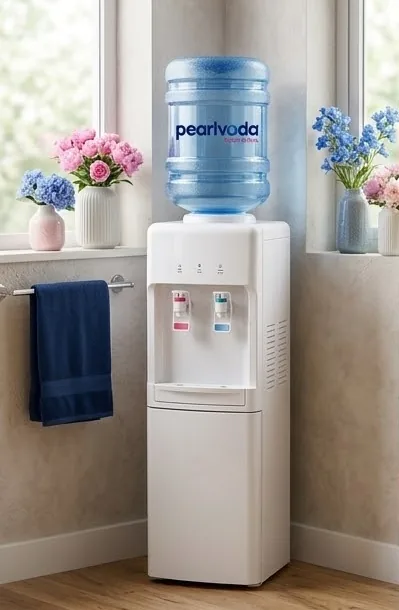
A sealed 19L bottle keeps water protected until you load it. After that, the water passes through the dispenser: the bottle seat, the reservoir, the taps. These parts are used every day, touched by hands and exposed to room air, so they need cleaning. Many households and offices never do it, or wipe the outside only.
This guide covers how to clean a 19L top-loading dispenser at home with things you already have. Dispenser designs differ, so treat these steps as a general method and follow your maker's manual wherever it says something different. If you also want to look after the bottles themselves, see how to store and handle a 19L water bottle.
Turn off the hot and cold switches if there are any, unplug the dispenser and lift the bottle off. A full 19L bottle is heavy, so lift with your knees bent and ask for help if needed. Stand the bottle upright, keep its neck clean and keep it away from the cleaning area.
Place a bowl under the taps and open the hot and cold taps until the water stops. Many dispensers also have a small drain plug at the back or underside, so check your manual. Tilting the unit slightly, with the plug open, can help it drain fully.
Slide out the drip tray and lift off the grill. Wash both in warm soapy water, rinse well and leave them to dry. This area collects splashes and is often the first place a film forms.
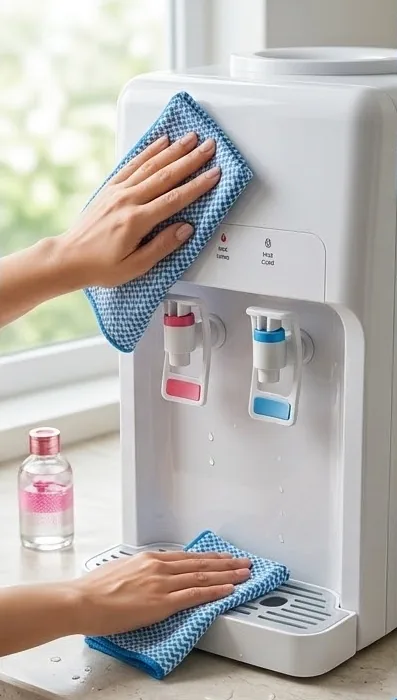
Wipe the tap handles and the body with a cloth dipped in soapy water. Use the soft brush on the tap mouth and around the base, where residue collects. If your manual shows that the taps unscrew, take them off and wash them. Otherwise clean only what you can reach. Rinse with a clean, damp cloth.
Look at the top of the dispenser, where the bottle sits. Wipe the rim, the seat and the probe or tube if your model has one. Use a clean cloth and a little soapy water, then wipe again with plain water. Do not push a brush or cloth down into the reservoir.
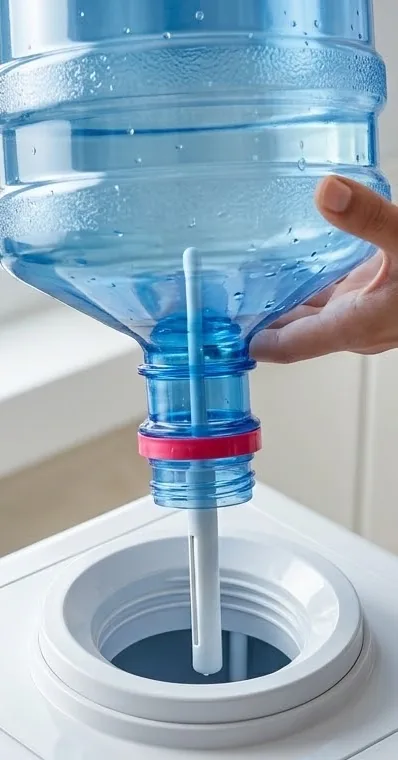
With the unit unplugged and cool, mix about one part white vinegar with three parts clean water. Pour about one litre into the bottle seat so it runs into the reservoir, and leave it for 15 to 20 minutes. This helps loosen mild scale and film. Then drain it through both taps into the bowl. If your manual says not to use vinegar, follow the manual.
Pour clean drinking water through, drain it through both taps and repeat at least two or three times, until there is no vinegar smell or taste. Do not skip this step: leftover cleaner is a bigger problem than a missed spot.
Dry the drip tray, grill and outside with a clean cloth and put everything back. Wash your hands, remove the seal from a fresh bottle, load it, plug the dispenser in and switch it on. Draw and discard a glass or two from each tap, then wait for the hot water to heat up before using it.
| Part | Suggested frequency |
|---|---|
| Outside, taps and front panel | Wipe every few days; daily in a busy office |
| Drip tray and grill | Wash weekly |
| Bottle seat and probe | Wipe each time you change the bottle |
| Inside the reservoir | Every one to three months, or as your manual advises |
These are practical guidelines, not a standard. Use the shorter interval if the dispenser is shared by many people, sits in a warm or dusty place or serves hot and cold water all day.
We suggest vinegar or mild dish soap for home cleaning. Bleach needs very careful dilution and thorough rinsing, and it must never be mixed with vinegar. Use it only if your manual specifically recommends it.
Yes. The bottle is sealed until you load it, but the water then passes through the seat, the reservoir and the taps. These parts need regular cleaning whichever bottled water you use.
No, cleaning your own dispenser is something you do at home. The bottles are cleaned before filling as part of our process (see our water), and empties are taken back at delivery. We can provide a dispenser on request, as listed in the FAQ.
If the dispenser leaks, a tap is cracked, the hot side stops heating or a smell stays after cleaning and rinsing, contact the maker or a qualified technician rather than opening the unit yourself.
Cleaning a dispenser takes about half an hour and needs only soap, a cloth and white vinegar. Wipe the taps and tray often, clean the inside every few months and always rinse well. A clean dispenser lets a fresh bottle do its job. If you are still working out how many bottles you need, see how to estimate your weekly requirement or how long a bottle lasts.
Message us on WhatsApp or use the order form. We confirm your delivery day by area, Monday to Saturday. See rates and offers for current plans.